Better Dungeon Design Part 2: Dense Interior
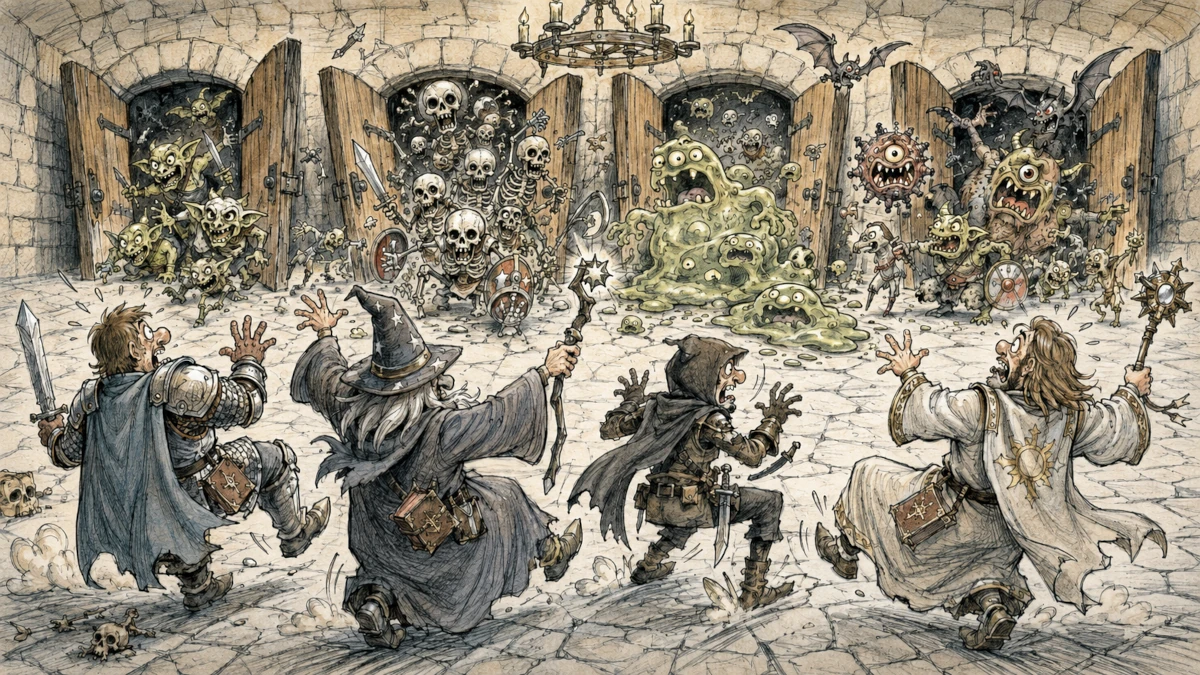
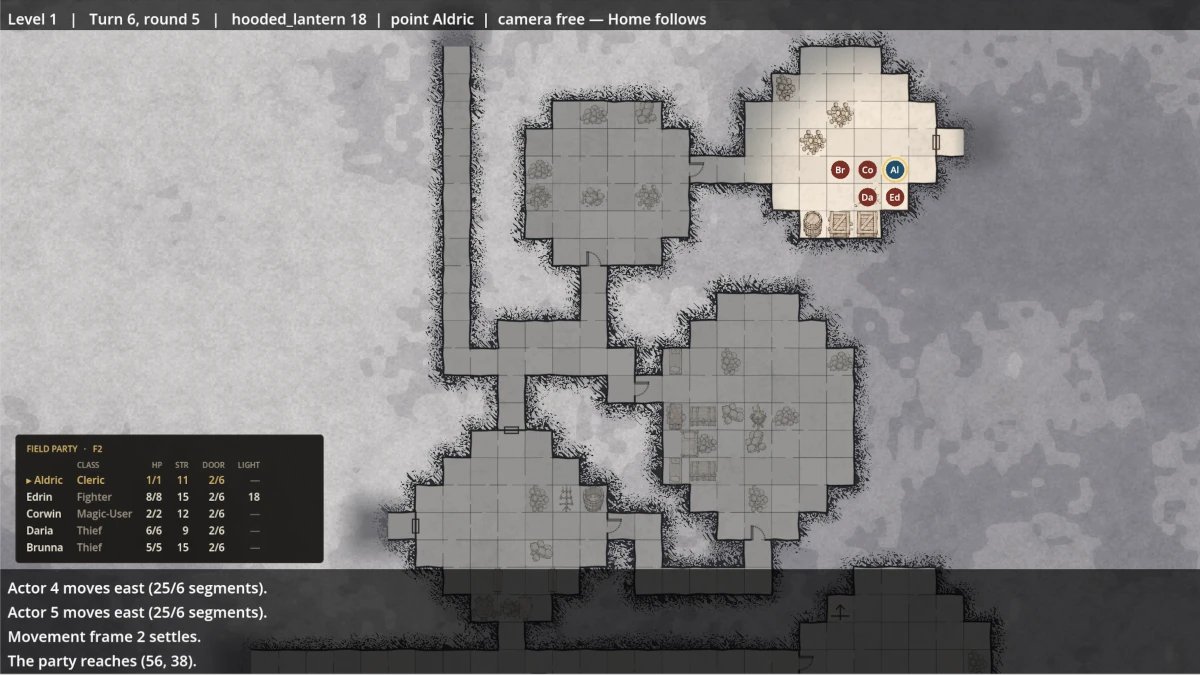
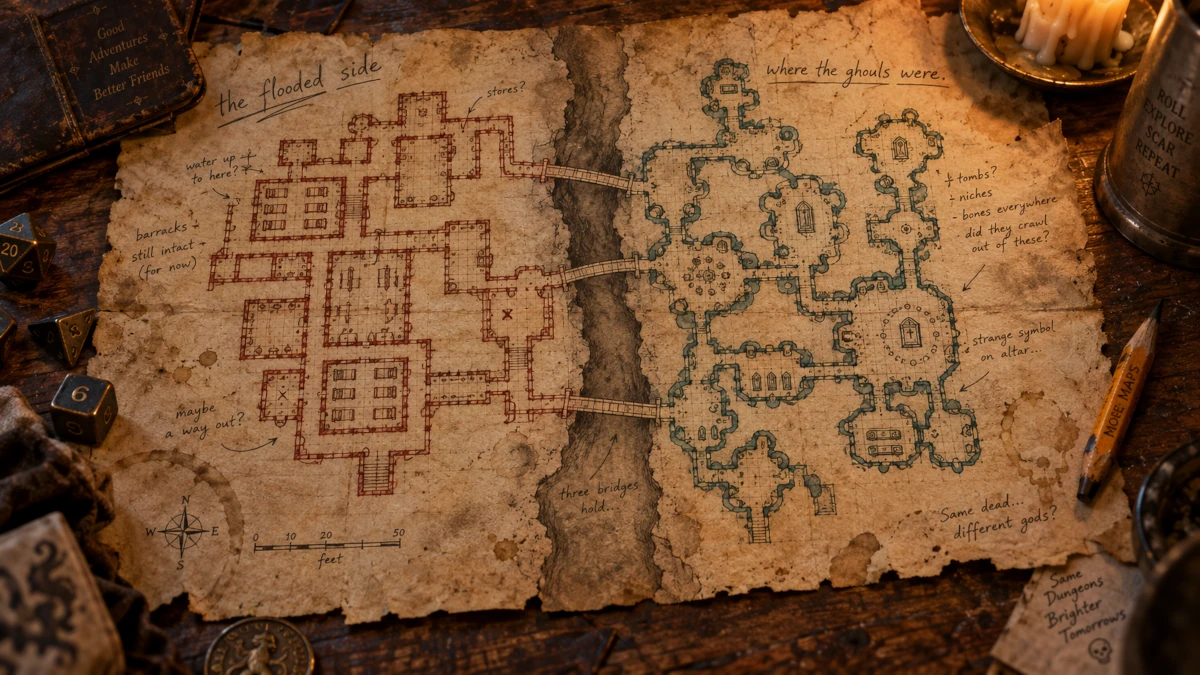
Corridors have been doing your party favors nobody asked for. Take them away and retreat becomes a gamble, noise carries three rooms over, and your torches last forever. Here's when that trade pays.
60 posts found

Corridors have been doing your party favors nobody asked for. Take them away and retreat becomes a gamble, noise carries three rooms over, and your torches last forever. Here's when that trade pays.

How room spacing shapes dungeon pacing, exploration, and player decisions—and why layout should be a deliberate part of adventure design.

5e 2024’s exception-heavy design can fuel rules debates; here’s how DMs and players can balance rulings, fun, and table expectations.

Practical guidance for crafting player-driven wartime stories: pitfalls to avoid, scenario types to run, tools to add tension, and moral nuance.

Streamline combat by declaring intentions, using simple ranges, and resolving maneuvers with opposed checks to keep TotM battles fast, tactical, and fun.

AI can streamline search, lore, prep, and tracking in tabletop play, freeing DMs and players to focus on storytelling while keeping human creativity central.

Use cuisine as a storytelling tool: describe dishes, tie meals to rituals, status, and environment, and turn ingredients into hooks for richer play.

OSR-inspired herbalism rules add strategic foraging, preservation checks, an expanded herb list, Ranger balance notes, and GM tips to your Shadowdark games.

Argues for XP-based advancement in D&D, rewarding non-combat play, encouraging agency, easing pacing, and doubling as a memory log for your campaign.

Build better tables by aligning assumptions about the world and preferred play styles, then using communication, examples, and incentives to support shared fun.